
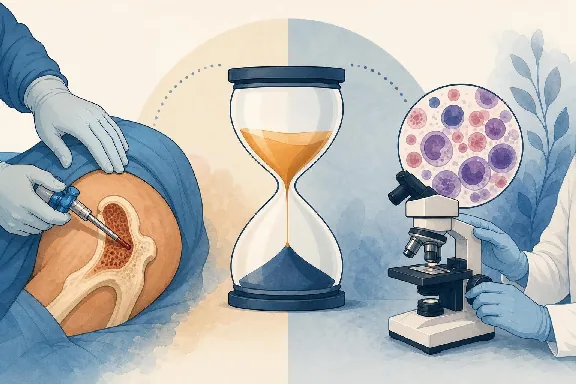
Understand how long a bone marrow test takes and when results come back with this detailed guide on procedure timing, lab stages, and tips for managing wait times.
Few medical procedures carry as much anxiety as a bone marrow test. The uncertainty around timing – both how long you’ll be in the procedure room and how long you’ll wait for answers – can feel almost as stressful as the test itself. If you’re wondering how long a bone marrow test takes and when results typically come back, the short answer is that the procedure itself is surprisingly quick, but the waiting game for results varies widely depending on what your doctor is looking for. Here’s a realistic breakdown of what to expect at each stage so you can plan your time, manage your nerves, and know the right questions to ask.
Understanding the Bone Marrow Procedure Timeline
A bone marrow test sounds intimidating, but the actual time commitment is more manageable than most people expect. Breaking the experience into three phases – preparation, the procedure itself, and recovery – gives you a much clearer picture of what your day will look like.
Preparation and Pre-Test Steps
Before anyone touches a needle, there’s a series of steps that take roughly 30 to 60 minutes. You’ll check in, change into a gown, and have your vitals taken. A nurse or technician will review your medications and allergies, and your doctor will confirm the procedure site, which is almost always the back of the hip bone (the posterior iliac crest).
If you’re receiving conscious sedation, an IV line will be placed, and you may need to wait for the sedation to take effect. Some facilities also require a brief period of monitoring before the procedure begins. Blood work, including a coagulation panel, may have been done at a prior visit, but occasionally it’s checked same-day. All of this pre-procedure time adds up, so plan to arrive at least 30 minutes before your scheduled appointment.
Duration of the Aspiration and Biopsy
Here’s the part that surprises most patients: the actual bone marrow aspiration and biopsy typically takes only 15 to 30 minutes from start to finish. The doctor cleans and numbs the site with a local anesthetic, which takes a few minutes to work. The aspiration, where liquid marrow is drawn through a needle, usually lasts under a minute. The biopsy, where a small core of solid bone and marrow tissue is removed, adds another minute or two.
Most of the 15- to 30-minute window is spent on positioning, numbing, and ensuring adequate samples are collected. If multiple samples are needed for different tests, it may take slightly longer. But the moments of actual discomfort are brief, typically described as a deep pressure or aching sensation rather than sharp pain.
Post-Procedure Recovery Time
After the needles come out, a pressure bandage is applied, and you’ll lie flat for 15 to 30 minutes. This helps minimize bleeding at the biopsy site. If you received sedation, expect to stay in the recovery area for an additional 30 to 60 minutes until the medication wears off and you’re alert enough to leave safely.
Most people spend a total of two to three hours at the facility from arrival to departure. You’ll likely be told to keep the bandage dry for 24 hours and avoid strenuous activity for a day or two. Soreness at the site is normal and usually manageable with over-the-counter pain relievers.
Factors That Influence the Total Procedure Length
Not every bone marrow test follows the same timeline. A few key variables can shorten or extend your visit significantly.
Impact of Sedation vs. Local Anesthesia
Choosing local anesthesia only – meaning just the numbing injection at the biopsy site – keeps the overall visit shorter. There’s no IV setup, no waiting for sedation to kick in, and no extended recovery period afterward. Many adults tolerate the procedure well with local anesthesia alone, especially if they’ve had one before and know what to expect.
Conscious sedation (typically with midazolam, fentanyl, or both) adds time on both ends. You’ll need the IV placed beforehand, and you’ll require monitoring until the sedation clears. This can add 45 minutes to an hour to your total visit. Some facilities now offer nitrous oxide as a middle ground, which wears off within minutes and doesn’t require an IV. If you’re anxious about the procedure, ask your hematologist which sedation options are available and how each one affects the schedule.
Inpatient vs. Outpatient Settings
Outpatient bone marrow biopsies, done in a clinic or day-procedure unit, tend to move faster because the workflow is streamlined. You show up, get it done, and go home. Inpatient procedures, performed while you’re already hospitalized, can take longer simply because of scheduling logistics. The hematology team may be fitting your biopsy between other consultations, and there’s often more coordination involved with nursing staff and floor schedules.
The procedure itself doesn’t change, but the wait before and after can stretch if you’re an inpatient. If timing matters to you and an outpatient option exists, it’s worth discussing with your care team.
When to Expect Your Bone Marrow Results
This is the question that keeps people up at night. The honest answer is that results come back in stages, and the full picture can take anywhere from a few days to several weeks.
Preliminary Results and Initial Findings
A pathologist or hematopathologist will examine the aspirate smear and the biopsy tissue under a microscope. Preliminary findings from the aspirate, which include cell counts, the ratio of different blood cell types, and any obvious abnormalities, are often available within one to three business days. Some institutions can provide a verbal preliminary read even sooner if the clinical situation is urgent.
These early results can sometimes answer the most pressing question: is there evidence of a blood cancer or other serious condition? But preliminary findings are exactly that – preliminary. They may confirm or raise suspicion, but the full diagnosis usually requires the specialized tests that take longer.
Specialized Testing and Final Reports
The complete bone marrow report typically arrives within 7 to 14 business days, though some complex cases stretch to three weeks. This final report integrates everything: the morphology (what cells look like under the microscope), flow cytometry results (which identify cell surface markers), cytogenetic analysis (chromosome studies), and molecular testing (which looks for specific gene mutations).
Your hematologist usually won’t schedule a results appointment until the final report is ready, because partial information can be misleading. If you haven’t heard anything after two weeks, it’s completely reasonable to call and ask for an update.
Why Some Lab Results Take Longer Than Others
The timeline variation isn’t random. Different tests have fundamentally different processes, and some simply can’t be rushed.
Cytogenetic and Molecular Analysis
Cytogenetic testing, which examines chromosomes for abnormalities like translocations or deletions, requires growing marrow cells in culture for 24 to 72 hours before they can be analyzed. FISH (fluorescence in situ hybridization) testing is faster, often returning within 3 to 5 days, because it doesn’t require cell culture. But conventional karyotyping, which provides a broader chromosomal overview, takes 10 to 14 days.
Molecular studies using PCR or next-generation sequencing (NGS) panels add another layer of complexity. NGS panels that screen for dozens of gene mutations relevant to blood cancers can take 10 to 21 days depending on the lab’s capacity and the specific panel ordered. In 2026, turnaround times for molecular testing have improved at major academic centers, but community hospitals often send these specimens to reference labs, which adds shipping and queue time.
The Decalcification Process for Biopsies
The solid core biopsy specimen contains actual bone, and bone can’t be sliced thin enough for microscopic examination until it’s been decalcified. This chemical process softens the bone tissue so it can be sectioned and stained, and it takes one to two days on its own. After decalcification, the specimen is embedded in paraffin, cut into thin sections, and stained, which adds another day or two.
This is why biopsy results consistently lag behind aspirate results. The aspirate is liquid and can be smeared on a slide and stained within hours, while the biopsy requires days of processing before a pathologist can even look at it. Immunohistochemical stains performed on the biopsy sections add further time, sometimes another two to three days per stain.
Receiving and Interpreting Your Findings
Getting the results is one thing. Understanding them is another.
How Doctors Communicate the Results
Most hematologists schedule a dedicated follow-up appointment to review bone marrow results in person, especially if the test was ordered to evaluate a potential malignancy. This appointment usually happens within one to three weeks of the procedure, timed to coincide with the final report’s completion.
Some doctors will call with preliminary results if they’re reassuring or if urgent treatment decisions need to be made. If your results are available through a patient portal, you might see the pathology report before your doctor has had a chance to discuss it with you. Reading a bone marrow pathology report without medical training can be alarming – terms like "dysplasia" or "atypical cells" don’t always mean what you might fear. If you do access results online, try to wait for your doctor’s interpretation before drawing conclusions.
Questions to Ask Your Hematologist
Walking into your results appointment with specific questions makes the conversation far more productive. Consider asking:
- What is the final diagnosis, and how confident are you in it?
- Were there any unexpected findings?
- Are all test results back, or are some still pending?
- What do the cytogenetic and molecular results mean for my prognosis?
- Does this change my treatment plan, and if so, how?
- Will I need a repeat bone marrow biopsy, and if so, when?
Writing these down beforehand helps, because it’s easy to forget important questions when you’re processing potentially life-changing information. Bringing a family member or friend to take notes can also be invaluable.
What to Remember While You Wait
The gap between having a bone marrow test and receiving results is genuinely difficult. The procedure itself is brief – usually under 30 minutes of active time – but the wait for complete results stretches across days and sometimes weeks. Preliminary findings may arrive within a few days, while specialized genetic and molecular testing can take two to three weeks.
If the waiting feels unbearable, remember that the time your samples spend in the lab isn’t wasted. Each test provides a different piece of the diagnostic puzzle, and rushing the process can lead to incomplete or inaccurate results. Your hematologist wants the full picture before making treatment recommendations, and that thoroughness works in your favor.
Call your doctor’s office if you haven’t received results after two weeks. Ask whether all tests have been completed or if some are still processing. And when you do sit down for that results conversation, bring your questions, bring a support person, and give yourself permission to ask for clarification on anything that doesn’t make sense. This is your health, and you deserve to understand every part of it.