
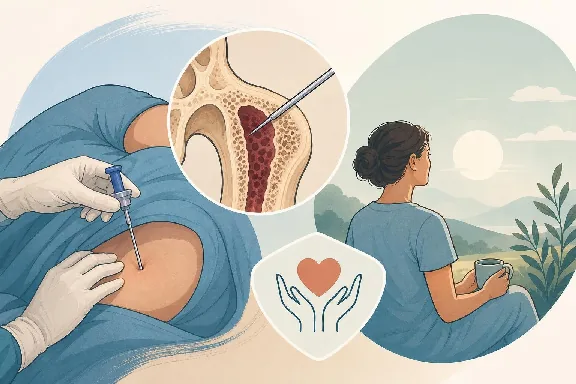
Learn how a bone marrow test hurts, including pain, numbing, and recovery details, to ease your anxiety with expert insights on what the procedure feels like.
Few medical procedures inspire as much dread as a bone marrow test. The idea of a needle going into your bone sounds genuinely awful, and if your doctor has recommended one, you’re probably wondering exactly how much pain you’re in for. The honest answer is more nuanced than most people expect. A bone marrow test does involve discomfort, but the pain is typically brief, manageable, and far less dramatic than what you might be imagining. Most patients describe it as a strong pressure or deep ache lasting only seconds, not the excruciating ordeal that anxiety builds it up to be. Understanding what happens during the procedure, how numbing works, and what recovery actually looks like can take a lot of the fear out of the experience. Whether you’re scheduled for a bone marrow aspiration, a biopsy, or both, here’s a realistic picture of the pain, the numbing options available, and what your recovery will involve.
Understanding the Bone Marrow Procedure
A bone marrow test is a diagnostic procedure used to examine the spongy tissue inside your bones. Doctors order it to investigate unexplained blood abnormalities, diagnose cancers like leukemia or lymphoma, check for infections, or monitor how well treatment is working. The procedure is typically done in a clinic or hospital outpatient setting and usually takes about 15 to 30 minutes from start to finish.
Most patients undergo both an aspiration and a biopsy during the same appointment. While that sounds like double the trouble, the two components are performed through the same site, one right after the other, so the overall experience isn’t significantly longer or more painful than having just one.
Differences Between Aspiration and Biopsy
An aspiration uses a hollow needle to withdraw liquid marrow from inside the bone. This is the part that tends to produce a brief, sharp pulling sensation, because the suction draws marrow fluid away from the bone’s interior. A biopsy, on the other hand, removes a small core of solid bone and marrow tissue. The biopsy needle is slightly larger and requires a twisting motion to extract the sample.
The sensations differ between the two. Aspiration often causes a sudden deep ache or tugging feeling that lasts only a few seconds. The biopsy tends to produce more of a pressure sensation. Most patients report that the aspiration is the more uncomfortable of the two, though neither typically lasts long enough to be unbearable.
Common Sites for the Procedure
The posterior iliac crest, the bony ridge at the back of your hip, is the most common site for bone marrow testing in adults. This area is preferred because it’s easily accessible, has a thick layer of marrow, and is relatively safe in terms of nearby structures.
In some cases, the sternum (breastbone) is used for aspiration only, though this is less common in 2026 due to the slightly higher risk profile. For children under certain ages, the tibia (shinbone) may be used. Your doctor will choose the site based on your anatomy, medical history, and the specific tests being ordered.
What to Expect: The Sensation of Pain
The pain question is what keeps most people up at night before this procedure, so here’s a straightforward breakdown. You will feel something. It won’t be painless. But the actual painful moments are measured in seconds, not minutes, and the intensity is usually described as moderate rather than severe.
A 2024 study published in the British Journal of Haematology found that on a 10-point pain scale, the average patient rated bone marrow aspiration at about 4.5 and biopsy at about 3.8. Those numbers drop further when conscious sedation is used. The key thing to understand is that the pain is not constant throughout the procedure: it comes in short bursts during specific moments.
The Initial Sting of Local Anesthesia
The first thing you’ll feel is the injection of local anesthetic, which stings and burns for about 10 to 15 seconds. Think of it like a bee sting that fades quickly. The anesthetic is injected in layers: first into the skin, then into the deeper tissue, and finally onto the surface of the bone itself (the periosteum). Each injection may sting briefly.
Once the area is numb, you shouldn’t feel sharp pain from the needle entering. The local anesthetic does an excellent job on the skin and surface tissue. What it can’t fully block is the sensation that comes from inside the bone, which is why the aspiration and biopsy still produce noticeable feelings.
Managing Pressure and Deep Aching
During the aspiration, you’ll likely feel a deep pulling or aching sensation that radiates outward from the biopsy site. This is the moment most patients remember. It’s an unusual feeling because it comes from inside the bone, and local anesthetics don’t fully reach the marrow cavity. The good news is that it typically lasts only 5 to 10 seconds per aspiration pull.
The biopsy portion usually feels like strong pressure. Some patients describe a grinding or crunching sensation, which sounds alarming but isn’t typically painful so much as strange. Breathing slowly and steadily through these moments helps significantly. Your medical team will talk you through each step so nothing catches you off guard.
Anesthesia and Numbing Options
You have more options for managing pain during a bone marrow procedure than you might realize. The standard approach uses local anesthesia alone, but sedation is increasingly available and worth discussing with your doctor if you’re particularly anxious.
Local Anesthetics for Surface Numbing
Lidocaine is the most commonly used local anesthetic for bone marrow procedures. It’s injected at the biopsy site and takes effect within a couple of minutes. The numbing covers the skin, subcutaneous tissue, and the periosteum (the membrane covering the bone).
Some facilities also offer topical numbing cream applied 30 to 60 minutes before the procedure, which can reduce the sting of the lidocaine injection itself. If you’re concerned about even that initial needle prick, ask your care team about this option when scheduling. The combination of topical and injected anesthesia makes the surface-level pain essentially negligible for most patients.
Conscious Sedation and General Anesthesia
Conscious sedation involves medications like midazolam or fentanyl given through an IV. You remain awake but feel relaxed, drowsy, and less aware of discomfort. Many patients who receive sedation report little to no memory of the procedure afterward. This option is increasingly common in 2026, particularly for patients who have had traumatic prior experiences or who need repeated bone marrow tests over time.
General anesthesia, where you’re fully unconscious, is rarely used for routine bone marrow procedures. It’s typically reserved for young children or patients with specific medical conditions that make sedation a better choice. If your anxiety about the procedure is severe, talk honestly with your hematologist: they deal with nervous patients every day and can help you find the right level of pain management.
Immediate Post-Procedure Recovery
Recovery from a bone marrow test is generally straightforward. Most people go home the same day, often within an hour of the procedure. The site will be bandaged with a pressure dressing, and you’ll be asked to lie on your back for 10 to 15 minutes to help with hemostasis.
The first 24 to 48 hours involve the most soreness. After that, discomfort fades steadily. Most patients feel completely back to normal within a week.
Managing Soreness and Tenderness
Expect the biopsy site to feel sore and bruised for several days. Over-the-counter pain relievers like acetaminophen or ibuprofen are usually sufficient. Your doctor may recommend avoiding aspirin for the first 24 hours since it can increase bleeding.
Applying an ice pack wrapped in a cloth to the site for 15 to 20 minutes at a time can help with both pain and swelling during the first day. Some patients find that sitting on a firm surface is uncomfortable for a couple of days, so a cushion or pillow can make a real difference. The soreness is similar to what you’d feel after a deep bruise: noticeable but not debilitating.
Activity Restrictions and Wound Care
Keep the pressure bandage on for at least 24 hours. After removing it, keep the site clean and dry. Avoid submerging the area in water (no baths, swimming pools, or hot tubs) for about 48 hours, though showering is typically fine after the bandage comes off.
Most doctors advise avoiding strenuous exercise and heavy lifting for 24 to 48 hours. Walking and light daily activities are usually fine the same day. If you received sedation, you’ll need someone to drive you home, and you should avoid making important decisions or signing documents for the rest of that day, since the sedation medications can impair judgment even after you feel alert.
Tips for Reducing Anxiety and Discomfort
Anxiety often makes the pain feel worse than it otherwise would. Your nervous system amplifies pain signals when you’re tense and fearful, so anything you can do to calm yourself genuinely reduces the discomfort you’ll experience.
- Ask your doctor to walk you through each step before and during the procedure. Knowing what’s coming eliminates the shock factor.
- Practice slow, deep breathing. Inhale for four counts, hold for four, exhale for four. This activates your parasympathetic nervous system and reduces tension.
- Bring headphones and a playlist, podcast, or audiobook. Many clinics allow this, and it provides a helpful distraction.
- Consider asking about anti-anxiety medication. A single dose of a benzodiazepine taken before the procedure can significantly reduce anticipatory fear.
- If you’ve had a previous bone marrow test that was very painful, tell your doctor specifically what went wrong. They can adjust their technique, use more anesthetic, or offer sedation.
One thing that genuinely helps: remind yourself that the worst moments last only seconds. The anticipation is almost always worse than the reality.
When to Contact Your Healthcare Provider
Most bone marrow test recoveries are uneventful, but you should know the warning signs that something needs medical attention. Call your doctor or go to urgent care if you experience any of the following:
- Bleeding that soaks through the bandage and doesn’t stop with 15 minutes of firm pressure
- Fever above 100.4°F (38°C) within 48 hours of the procedure
- Increasing redness, swelling, warmth, or drainage at the biopsy site, which could indicate infection
- Pain that gets worse rather than better after the first 48 hours
- Numbness or tingling in your leg on the side of the biopsy
These complications are uncommon. Infection rates for bone marrow biopsies are well under 1%, and serious bleeding is rare in patients with normal platelet counts. But knowing what to watch for gives you peace of mind during recovery.
The reality of a bone marrow test is far less frightening than the idea of one. Yes, there are a few seconds of genuine discomfort, particularly during the aspiration. But the pain is brief, the numbing options are effective, and recovery is typically quick and uncomplicated. If you’re facing this procedure, the single best thing you can do is have an honest conversation with your medical team about your pain concerns. They can tailor the experience to your needs, whether that means extra local anesthetic, conscious sedation, or simply a detailed play-by-play so you’re never caught off guard. You’ll get through it, and in most cases, you’ll wonder afterward why you were so worried.